TORII ATLAS · CHOOSE YOUR VISIT
Which Kyoto Shrine Should You Visit? Compare Four Options
Compare Fushimi Inari, Shimogamo, Yasaka and Kitano Tenmangu by sights, location and visit scope. Separate mountain walks and paid gardens from a shrine visit.
Torii paths, a forest approach, Gion shrine traditions or learning prayers: decide what you most want from your visit before comparing the practical details. These four shrines offer different reasons to stop.
This guide compares four selected Kyoto shrines. It does not rank every shrine in Kyoto or propose a route visiting them all. Compare the area each time estimate covers; a short precinct visit is not the same as a mountain circuit or a seasonal garden visit.
Start with what matters to you
Fushimi Inari Taisha
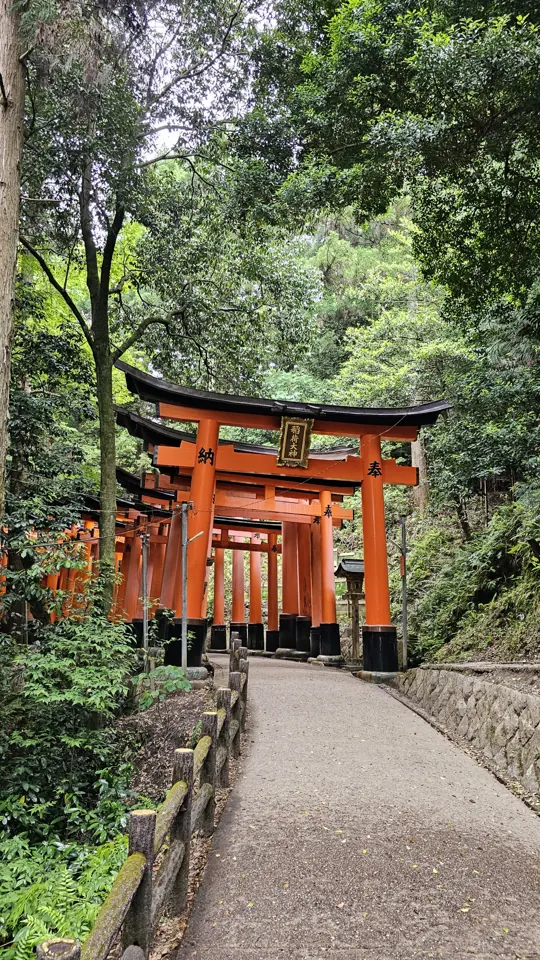
Choose Fushimi Inari if torii-lined paths are your priority. Decide in advance whether you want a shorter visit in the lower precinct or a longer walk on sacred Inariyama. The visit estimate below covers only the lower area and an initial section of the paths.
45–90 min
Lower precinct and an initial section of the torii paths; not a full mountain circuit.
Shimogamo Shrine
Choose Shimogamo if you want the forest approach of Tadasu no Mori as part of your shrine visit. Relationship prayers concern Aioi-sha within the grounds. Plan any paid Oidono or museum visit separately from the forest and precinct walk.
45–90 min
The forest approach and main shrine precinct, excluding a separate visit to Kawai Shrine, special paid visits, formal prayers and queues. When visiting both shrines, do not count shared approach walking twice.
Yasaka Shrine
Choose Yasaka if the Gion area fits your plans and you want to explore a shrine connected with the Gion Festival. Around-the-clock grounds access does not mean overnight amulet or goshuin service. For relationship prayers, look for Okuninushi-sha within the precinct.
30–60 min
A precinct visit including a few subsidiary shrines, excluding formal prayers and queues.
Kitano Tenmangu
Choose Kitano Tenmangu if learning prayers or its National Treasure shrine buildings are your priority. Plum and maple gardens are seasonal visits with separate conditions; check dates and fees rather than assuming they are included in a normal precinct visit.
30–60 min
Shrine buildings and grounds; seasonal gardens and museum visits need additional time.
These ranges are planning estimates, not official visit durations. Allow extra time for travel, queues and breaks. Prayer traditions describe cultural associations, not guaranteed results.
Compare the practical details
The buttons below open the named candidates and replace any current comparison. You can then change the selection (up to three).
Fushimi, Kyoto
Fushimi Inari Taisha
伏見稲荷大社
Choose Fushimi Inari if torii-lined paths are your priority. Decide in advance whether you want a shorter visit in the lower precinct or a longer walk on sacred Inariyama. The visit estimate below covers only the lower area and an initial section of the paths.
- What to see
- Torii-lined paths
- Sacred Inariyama
- Fox messengers, not the deity itself
- Visit time & scope
- 45–90 min
Lower precinct and an initial section of the torii paths; not a full mountain circuit.
This 45–90-minute range is a planning estimate for the shorter visit. Kyoto City tourism describes the full mountain circuit as about 4 km and 2 hours; allow more time for breaks and crowds.
- Getting there
- JR Inari Station is next to the shrine; the official guide lists a 5-minute train ride from Kyoto Station. From Keihan Fushimi-inari Station, walk about 5 minutes east. These are arrival directions, not time spent walking the mountain paths.
- Before you go
- Respect restricted areas. The official rules prohibit smoking, drones and eating outside designated areas.
Hours, counters & costs
- Grounds hours
- The grounds are open day and night according to Kyoto City tourism. Offices have daytime hours; follow any restrictions posted on site.
- Counter & prayer reception
- Amulet counter: 08:00–18:00 (Kyoto City tourism). Formal prayer services: 08:30–16:30; the shrine asks visitors to apply by about 16:00. New Year and festival schedules may differ.
- Admission & separate costs
- Admission to the grounds is free. Offerings, amulets and formal prayers are separate.
Sakyo, Kyoto
Shimogamo Shrine
下鴨神社
Choose Shimogamo if you want the forest approach of Tadasu no Mori as part of your shrine visit. Relationship prayers concern Aioi-sha within the grounds. Plan any paid Oidono or museum visit separately from the forest and precinct walk.
- What to see
- Tadasu no Mori forest approach
- Romon gate and the shrine precinct
- Aioi-sha’s relationship-prayer tradition
- Visit time & scope
- 45–90 min
The forest approach and main shrine precinct, excluding a separate visit to Kawai Shrine, special paid visits, formal prayers and queues. When visiting both shrines, do not count shared approach walking twice.
Allow extra time for crowds and walking at your own pace.
- Getting there
- The official guide gives a walk of about 12 minutes from Keihan Demachiyanagi Station. City buses stop at Shimogamo-jinja-mae or Tadasu-no-mori-mae; check current routes before travel.
- Before you go
- For relationship prayers, visit Aioi-sha, a subsidiary shrine dedicated to Musuhi no Kami; this is distinct from the main shrine’s kami. Plan the forest walk separately from the paid Oidono and museum visit. The romon and Kawai Shrine close at different times; formal-prayer reception hours are not confirmed goshuin-counter hours.
Hours, counters & costs
- Grounds hours
- Inside the romon gate: 06:30–17:00. Kawai Shrine: 06:30–16:30. Shrine ceremonies can change these hours.
- Counter & prayer reception
- Formal-prayer reception: 09:00–16:30. Regular amulet and goshuin-counter hours could not be confirmed from the official pages reviewed.
- Admission & separate costs
- The official special-visit guide lists a combined ticket of ¥1,000 for adults, covering Oidono, the former Jinguji site and Shukosha; junior-high pupils and younger are free. Special visits run 10:00–16:00. Ordinary-visit admission is not stated in the official pages reviewed.
Higashiyama, Kyoto
Yasaka Shrine
八坂神社
Choose Yasaka if the Gion area fits your plans and you want to explore a shrine connected with the Gion Festival. Around-the-clock grounds access does not mean overnight amulet or goshuin service. For relationship prayers, look for Okuninushi-sha within the precinct.
- What to see
- Gion Festival heritage
- Main building dedicated to Susanoo and associated kami
- Okuninushi-sha’s relationship-prayer tradition
- Visit time & scope
- 30–60 min
A precinct visit including a few subsidiary shrines, excluding formal prayers and queues.
Allow extra time for crowds and walking at your own pace.
- Getting there
- About 5 minutes on foot from Keihan Gion-shijo Station or 8 minutes from Hankyu Kyoto-kawaramachi Station, according to the official guide.
- Before you go
- If you want a goshuin (a shrine seal) or an omamori (an amulet), plan a daytime visit and confirm the counter hours. The 24-hour grounds access does not establish overnight counter service. For relationship prayers, the relevant stop is Okuninushi-sha within the precinct; its kami are distinct from those of the main shrine.
Hours, counters & costs
- Grounds hours
- The official access page states that shrine visits are possible 24 hours a day. Counter services have separate hours.
- Counter & prayer reception
- Shrine office reception: 09:00–17:00. Separate regular goshuin and amulet-counter hours could not be confirmed from the official pages reviewed.
- Admission & separate costs
- Ordinary-visit admission: not confirmed in the official information reviewed. Offerings, amulets and formal prayers are separate.
Kamigyo, Kyoto
Kitano Tenmangu
北野天満宮
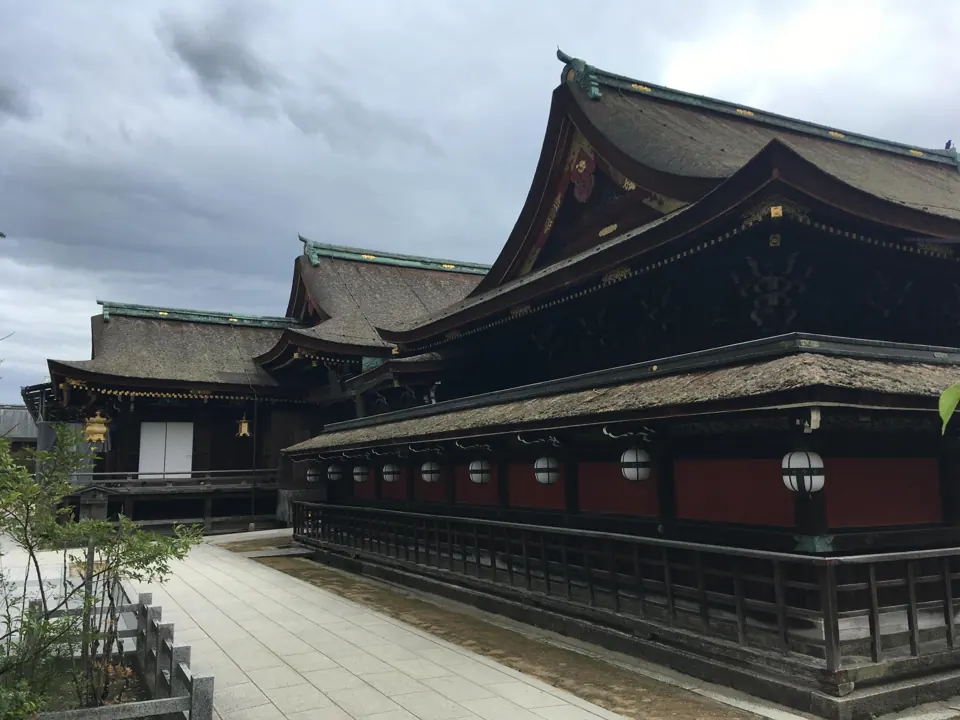
Choose Kitano Tenmangu if learning prayers or its National Treasure shrine buildings are your priority. Plum and maple gardens are seasonal visits with separate conditions; check dates and fees rather than assuming they are included in a normal precinct visit.
- What to see
- National Treasure shrine buildings
- Seasonal plum and maple gardens
- Learning and exam prayers
- Visit time & scope
- 30–60 min
Shrine buildings and grounds; seasonal gardens and museum visits need additional time.
Allow extra time for crowds and walking at your own pace.
- Getting there
- About 5 minutes on foot from Kitano-Hakubaicho Station; city buses stop at Kitano Tenmangu-mae.
- Before you go
- The main courtyard closes with Sanko-mon, 30 minutes before the grounds. The 2026 autumn maple garden is a separate visit: 31 October–6 December, 09:00–16:00 (last admission 15:40); illumination runs 13 November–6 December, from dusk to 20:00 (last admission 19:40). Adult admission is ¥1,500. Check the dated official announcement; museum openings need a separate check.
Hours, counters & costs
- Grounds hours
- As listed on 7 October 2026: 07:00–17:00; Sanko-mon closes at 16:30. New Year and illumination events may have different hours.
Dated hours or seasonal information needs a fresh check. Confirm the latest official notice before visiting. Official site
- Counter & prayer reception
- Office/amulets 09:00–16:30; prayer reception 09:00–16:00.
- Admission & separate costs
- The shrine grounds are free. Gardens and museum exhibitions have separate, event-dependent fees; check the current programme rather than assuming year-round admission.
Before you decide
Choose the visit area first, then check opening hours and any counter you need. A shrine’s grounds may stay open after amulet or goshuin reception ends. Check dated announcements for seasonal visits, and use the official website for last-minute changes.
First shrine visit: steps, etiquette and offerings →Sources & information dates
Selection advice is Torii Atlas’s interpretation of the listed facts, not a personal visit report. Practical details come from the same records as the shrine guides; the dates below are their last checks, not a new source review for this article.