Keep one comparison and one search in this browser. Nothing is saved until you choose Save. Saving again replaces that item. No account, syncing or offline pages; private browsing or clearing site data may remove it.
Nothing saved yet. Select candidates, or set filters in the shrine finder, then save here.
Compare the visit scope, transport notes and prayer traditions of the shrines currently listed here. This is a selected guide, not a complete regional directory.
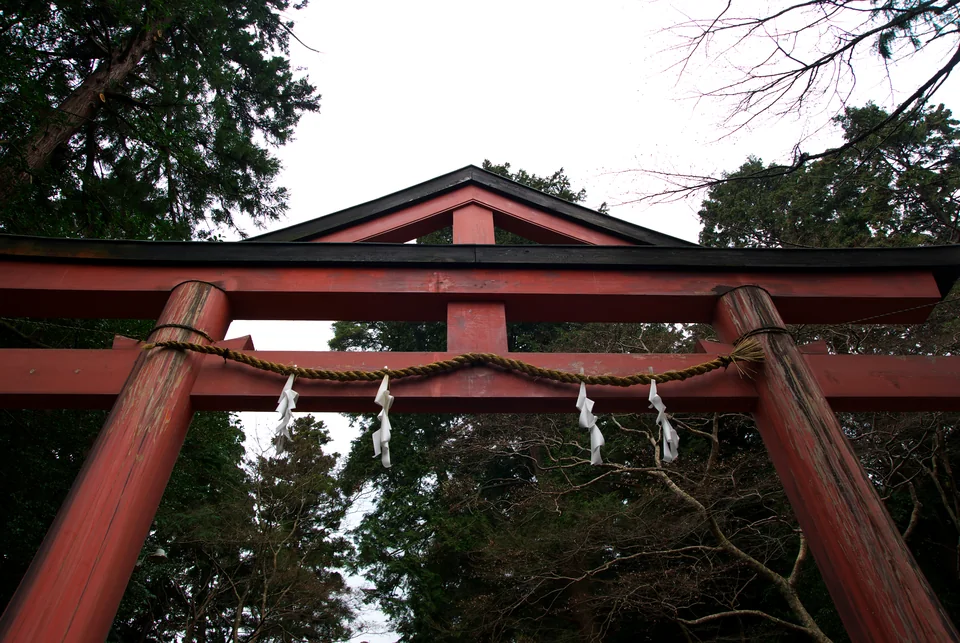
Compare shrine visits in Kyoto, Osaka and Nara with the two separate Ise Jingu sanctuaries in Mie. The region covers different city itineraries: torii paths, lantern-lined approaches and Ise’s forest walks have different walking commitments. Shrine-time estimates exclude intercity transport, paid exhibitions and meals. Kumano Nachi Taisha in Wakayama adds a mountain pilgrimage setting, requiring a separate transport plan from the region’s large cities.
The forest approach to the main sanctuary · Toyouke’s food-offering tradition · Magatama Pond; the Sengukan museum is a separate visit
Estimated visit
30–60 min
The main precinct following the official 30- or 60-minute model courses. Excludes station travel, Naiku, the Sengukan museum, formal prayers and queues.
Getting there
Ise City Tourism Association lists about 5 minutes on foot from Iseshi Station or 7–12 minutes from Ujiyamada Station. Naiku requires a separate journey; check the current bus route rather than treating both shrines as one walkable precinct.
Uji Bridge and its wooden torii · The Isuzu River and wooded approach · Worship at the main sanctuary
Estimated visit
60–90 min
Uji Bridge, the main sanctuary and selected precinct sights, following the official 60- or 90-minute model courses. Excludes buses, Geku, meals, shopping, formal prayers and queues.
Getting there
Ise City Tourism Association lists buses to Naiku-mae taking about 20 minutes from Iseshi or Ujiyamada Station, or about 6 minutes from Isuzugawa Station. The walk from Uji Bridge into the shrine is additional. Check current buses and allow for road congestion.
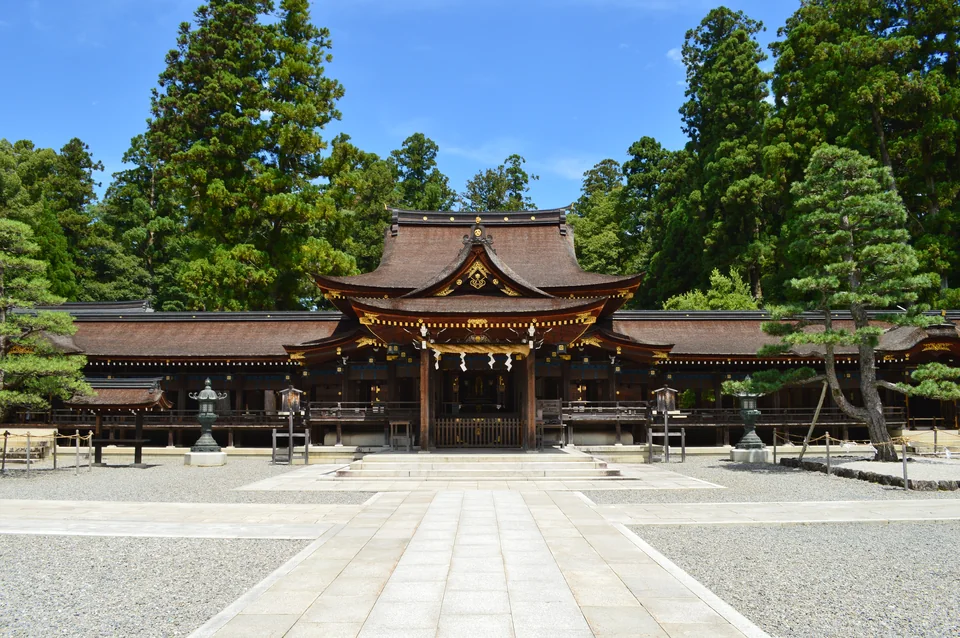
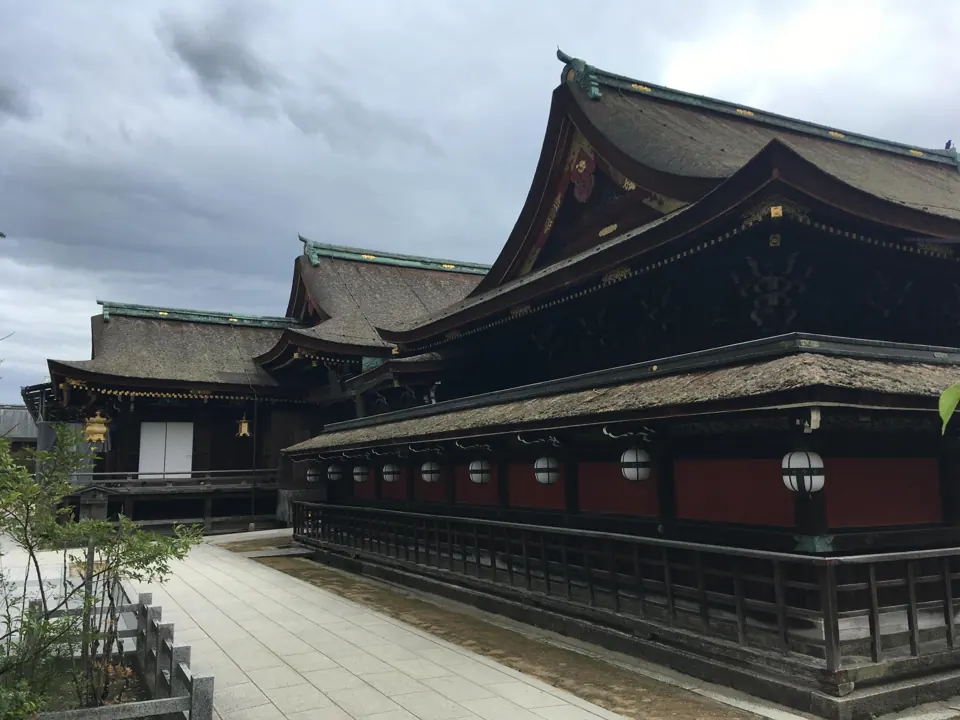
National Treasure east and west sanctuaries · Distinctive Sanno torii · Woodland and streams at Mount Hiei’s foot
Estimated visit
40–60 min
A lower-precinct circuit around the east and west sanctuaries, allowing some margin over the official usual 40-minute visit; excludes the uphill inner shrines, station transfers and counter queues.
Getting there
The official access guide gives about 10 minutes on foot from Keihan Sakamoto-hieizanguchi Station or 20 minutes from JR Hieizan-Sakamoto Station.
Address & enshrined kami
5-1-1 Sakamoto, Otsu, Shiga
Onamuchi no Kami (west sanctuary) · Oyamakui no Kami (east sanctuary)
Lake Biwa torii seen from the precinct · Designated main sanctuary · Lake views from the Aiko Shirahigedai platform
Estimated visit
15–30 min
Ordinary worship and a view of the lake torii from the precinct platform; excludes transport, prayers and counter queues, and does not involve crossing the highway.
Getting there
Shiga’s official tourism guide gives about five minutes by car from Omi-Takashima Station. Plan station transfers separately; do not assume roadside walking or crossing the highway is safe.
Main worship area at Otaga-san · Views of Taiko Bridge · Longevity and relationship prayer traditions
Estimated visit
20–40 min
Ordinary worship and exterior views of the buildings and Taiko Bridge; excludes the Okushoin garden, exhibitions, shrine-town walks, transport and formal prayers.
Getting there
The official guide gives about 10 minutes on foot from Taga Taisha-mae Station on the Ohmi Railway. Check connections and waiting times separately when travelling from Hikone.
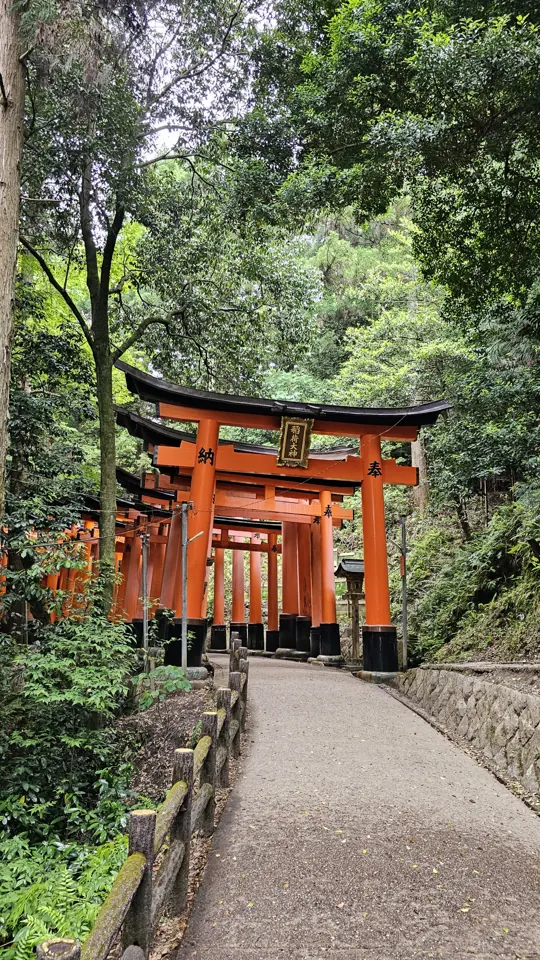
Torii-lined paths · Sacred Inariyama · Fox messengers, not the deity itself
Estimated visit
45–90 min
Lower precinct and an initial section of the torii paths; not a full mountain circuit.
Getting there
JR Inari Station is next to the shrine; the official guide lists a 5-minute train ride from Kyoto Station. From Keihan Fushimi-inari Station, walk about 5 minutes east. These are arrival directions, not time spent walking the mountain paths.
Address & enshrined kami
68 Fukakusa Yabunouchi-cho, Fushimi-ku, Kyoto
Ukanomitama no Okami · Satahiko no Okami · Omiyanome no Okami · Tanaka no Okami · Shino Okami
Colourful carvings on the sanctuary buildings · The front gate associated with Fushimi Castle · The Gokosui water tradition
Estimated visit
25–45 min
Ordinary worship and the main gate and precinct; excludes the stone garden, formal prayers, festival events, queues and station travel.
Getting there
Official access: about 4 minutes from Kintetsu Momoyama-goryomae and 6 minutes from Keihan Fushimi-momoyama. The Gokonomiya-mae bus stop is beside the shrine.
The National Treasure sanctuary complex · Hachiman worship on Mt. Otokoyama · The wooded summit approach
Estimated visit
30–60 min
Ordinary worship and the main summit precinct; excludes cable travel, the climb from the station, formal prayers, special tours and queues.
Getting there
From Keihan Iwashimizu-hachimangu Station, use the cable railway to Hachimangu-sanjo and walk about 5 minutes. Kyoto Prefecture tourism also gives about 30 minutes up the main approach on foot; check current cable operations.
Ordinary precinct worship and walking; excludes special worship, formal prayers, bus travel and queues.
Getting there
City bus 4 from Kyoto Station or Demachiyanagi stops at Kamigamo-jinja-mae, beside the shrine. The official guide gives a 25-minute walk from either Kitaoji or Kitayama Station.
Hand-mirror-shaped ema associated with beauty prayers · The subsidiary-shrine precinct within Shimogamo
Estimated visit
20–40 min
Kawai Shrine worship and a short look at the mirror-ema tradition. Excludes travel from the station, ema preparation or offering queues, Shimogamo’s main shrine, extended forest walks and special paid visits.
Getting there
Kyoto’s official tourism guide lists about 7 minutes on foot from Keihan Demachiyanagi Station, or about 4 minutes from the Shinaoibashi city-bus stop. This is the Kawai Shrine visit, not the longer walk to Shimogamo’s main sanctuary.
Address & enshrined kami
59 Shimogamo Izumigawa-cho, Sakyo-ku, Kyoto
Tamayorihime no Mikoto (identified here in shrine tradition as Emperor Jimmu’s mother)
Lantern-lined main-shrine stairs · Yui no Yashiro and its relationship tradition · The forest setting around the rear shrine
Estimated visit
60–90 min
Ordinary worship at the main, Yui and rear shrines, including walking between them; excludes travel to Kibune, formal prayers and queues.
Getting there
From Eizan Railway Kibuneguchi Station, Kyoto tourism gives about 30 minutes on foot, or a bus to Kibune followed by about 5 minutes walking. Check current bus operations before travelling.
Address & enshrined kami
180 Kurama Kibunecho, Sakyo-ku, Kyoto
Takaokami no Kami (main and rear shrines) · Iwanagahime no Mikoto (Yui no Yashiro)
Brewing traditions associated with sake and other fermented products · Shofuen gardens by Mirei Shigemori, with separate admission · A shrine stop near Hankyu Matsunoo-taisha Station
Estimated visit
30–60 min
Ordinary worship and the main precinct; excludes paid gardens, statue hall, mountain paths, formal prayers, queues and station travel.
Getting there
Kyoto City tourism gives about 3 minutes on foot from Hankyu Matsunoo-taisha Station or the Matsunoo Taisha-mae bus stop.
Black torii made from unpeeled kunugi oak · Saiō and The Tale of Genji traditions · Nonomiya Daikokuten and the Kameishi prayer stone
Estimated visit
15–30 min
An ordinary visit inside the small precinct; excludes bamboo-area walking, formal prayers, queues and station travel.
Getting there
Kyoto’s official school-trip guide gives about 10 minutes on foot from JR Saga-Arashiyama or Randen Arashiyama, and 3 minutes from the Nonomiya bus stop.
Tadasu no Mori forest approach · Romon gate and the shrine precinct · Aioi-sha’s relationship-prayer tradition
Estimated visit
45–90 min
The forest approach and main shrine precinct, excluding a separate visit to Kawai Shrine, special paid visits, formal prayers and queues. When visiting both shrines, do not count shared approach walking twice.
Getting there
The official guide gives a walk of about 12 minutes from Keihan Demachiyanagi Station. City buses stop at Shimogamo-jinja-mae or Tadasu-no-mori-mae; check current routes before travel.
Address & enshrined kami
59 Shimogamo Izumigawa-cho, Sakyo-ku, Kyoto
Kamo Taketsunumi no Mikoto · Tamayorihime no Mikoto
The four main sanctuaries · Daigengu’s distinctive exterior · Subsidiary shrines linked to food and sweets
Estimated visit
35–60 min
Ordinary worship and selected nearby subsidiary precincts; excludes internal special openings, a full Yoshidayama walk, formal prayers, queues and station travel.
Getting there
Official access gives about 20 minutes on foot from Keihan Demachiyanagi or about 5 minutes from the Kyodai Seimon-mae city-bus stop.
Address & enshrined kami
30 Yoshida Kaguraokacho, Sakyo-ku, Kyoto
Takemikazuchi no Mikoto · Ihainushi no Mikoto · Amenokoyane no Mikoto · Himegami
The 12-metre-high lion stage · A short precinct visit near Namba · Susanoo worship in Motomachi
Estimated visit
15–30 min
Ordinary worship and a look at the lion stage; excludes formal prayers, queues and station travel.
Getting there
Osaka tourism gives about 6 minutes on foot from Namba stations. Different railway exits lead to different routes; check the map for the Motomachi address.
The main sanctuary rebuilt in 1843 · Tenjin learning traditions · An approach beside Tenjinbashisuji
Estimated visit
25–45 min
Ordinary worship and the main precinct; excludes festivals, shopping, formal prayers, queues and station travel.
Getting there
From Minamimorimachi exit 4 or JR Osaka Tenmangu exit 7, walk south along Tenjinbashisuji and turn left at the second crossing. Osaka tourism gives about 5 minutes from either station.
Four main sanctuaries in the Sumiyoshi-zukuri style · The arched Sorihashi bridge · A shrine approach served by both trains and trams
Estimated visit
30–60 min
Ordinary worship and a look at the four main sanctuaries and main precinct; excludes extended subsidiary-shrine routes, formal prayers, queues and station travel.
Getting there
Official access: about 3 minutes east from Nankai Sumiyoshi-taisha Station, 5 minutes west from Nankai Sumiyoshi-higashi, or immediately by Hankai’s Sumiyoshi-toriimae tram stop.
Address & enshrined kami
2-9-89 Sumiyoshi, Sumiyoshi-ku, Osaka
Sokotsutsu no Mikoto · Nakatsutsu no Mikoto · Uwatsutsu no Mikoto · Empress Jingu
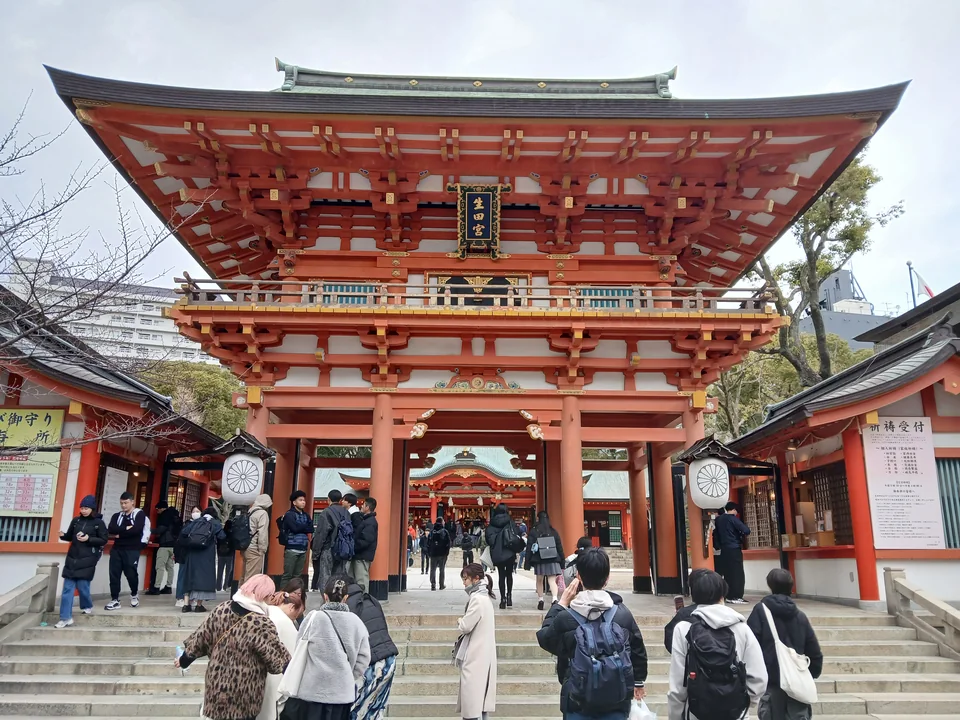
Vermilion gate and main worship area · Ikuta woodland behind the shrine · Relationship-prayer traditions
Estimated visit
20–40 min
Ordinary worship and a short walk in Ikuta woodland; excludes transport, counter queues and formal prayers.
Getting there
The official guide gives about 10 minutes on foot north from JR Sannomiya or the private-railway Sannomiya stations, and about 20 minutes south from Shin-Kobe.
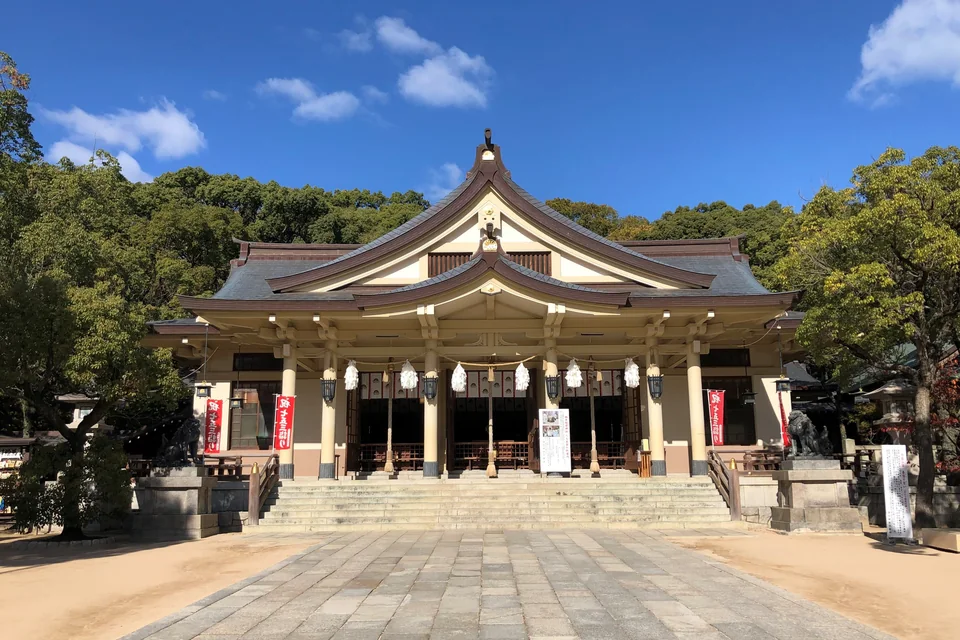
Main worship hall rebuilt in 1952 · Main gate and paved central approach · Places associated with Kusunoki Masashige
Estimated visit
20–40 min
Ordinary worship and the main precinct; excludes the treasure museum, formal prayers, transport and queues.
Getting there
About 3 minutes on foot from JR Kobe Station; the east exit of Kosoku Kobe Station leads close to the shrine. Okurayama subway station is about 5 minutes away.
Red Gate (omote daimon) · Long earthen wall (oneribei) · Vermilion shrine buildings and Ebisu traditions
Estimated visit
20–40 min
Ordinary worship, the Red Gate and a short precinct walk; excludes exhibitions, transport and festival queues.
Getting there
About 5 minutes on foot from the Ebisu exit of Hanshin Nishinomiya Station, or 10 minutes from JR Sakura Shukugawa Station. JR Nishinomiya is a different station.
Address & enshrined kami
1-17 Shakecho, Nishinomiya, Hyogo
Ebisu Okami (Hiruko) · Amaterasu Omikami · Okuninushi no Okami · Susanoo no Okami
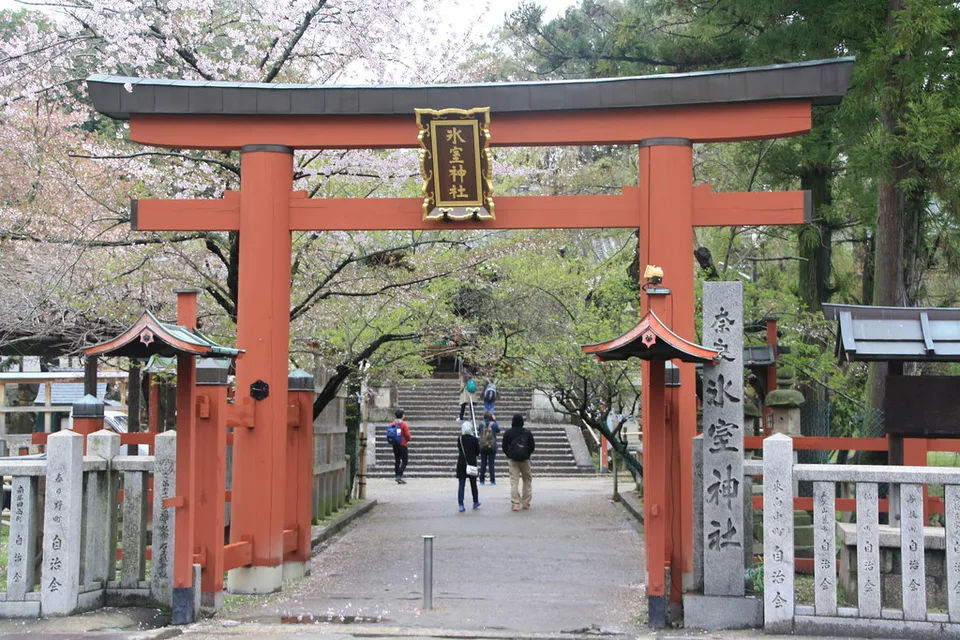
A shrine tradition connected to stored ice · The precinct facing the Nara National Museum · Ice fortune slips, subject to current availability
Estimated visit
15–30 min
Ordinary worship and the main precinct; excludes performances, formal prayers, queues and station travel.
Getting there
The official guide gives about 15 minutes east on foot from Kintetsu Nara Station. Buses stop at Himurojinja / Kokuritsu Hakubutsukan-mae, beside the museum.
Address & enshrined kami
1-4 Kasuganocho, Nara
Osasagi no Mikoto · Tsuge no Inagi Oyamanushi no Mikoto · Nukata no Onakatsuhiko no Mikoto
Vermilion shrine buildings · Stone lanterns along the approach and hanging lanterns by the buildings · A choice between ordinary worship and paid special worship
Estimated visit
45–90 min
The main approach and ordinary main-shrine worship; excludes paid special worship, museum, garden, other temples, queues and travel from the station.
Getting there
The official guide gives about 25 minutes on foot from Kintetsu Nara. From JR or Kintetsu Nara, take a bus to Kasuga Taisha Honden; a different loop-bus stop, Kasuga Taisha Omotesando, requires a further 10-minute walk.
Address & enshrined kami
160 Kasuganocho, Nara City, Nara
Takemikazuchi no Mikoto · Futsunushi no Mikoto · Amenokoyane no Mikoto · Himegami
Worship directed towards Mount Miwa · Important Cultural Property worship hall · Wooded approach and sake-brewing traditions
Estimated visit
30–60 min
Ordinary worship and the main precinct walk; excludes transport, formal prayers, exhibitions, queues and mountain hikes.
Getting there
Nara Prefecture's travel guide gives about 5 minutes on foot from JR Miwa Station. The shrine announced the end of regular Sakurai–shrine bus services in March 2026; plan by rail and walking, checking any special-event buses separately.
Benzaiten and performing-arts traditions · The distinctive Isuzu ritual bell · Shrine and village landscape
Estimated visit
20–40 min
Ordinary worship and the main precinct walk; excludes travel to the shrine, formal prayers, exhibitions, queues and any mountain hike.
Getting there
From Shimoichiguchi Station, the shrine describes about one hour by bus towards Nakaiozumi to Tenkawa Daibenzaitensha, or a bus to Tenkawa Kawai followed by about 30 minutes on foot. Services are infrequent; check the return timetable.
Address & enshrined kami
107 Tsubonouchi, Tenkawa, Yoshino-gun, Nara
Ichikishimahime no Mikoto (also worshipped as Benzaiten) · Kumano ni Imasu Okami · Yoshino ni Imasu Okami · Spirits of four Southern Court emperors · One hundred kami, beginning with Ame no Minakanushi
Cypress-bark-roofed wooden sanctuaries · 158-step approach through trees · Yatagarasu, the three-legged crow of Kumano tradition
Estimated visit
30–60 min
The present main shrine and stair approach only. Add time for Oyunohara, exhibitions or any Kumano Kodo walk; transport and queues are excluded.
Getting there
Take a bus from JR Shingu or Kii-Tanabe Station to Hongu Taisha-mae, then walk to the shrine approach. The prefectural guide gives about 6 minutes from the stop. Check the current timetable and return service; this is not a short transfer from the railway.
Address & enshrined kami
Hongu, Hongu-cho, Tanabe, Wakayama
Ketsumimiko no Okami (associated with Susanoo no Mikoto)
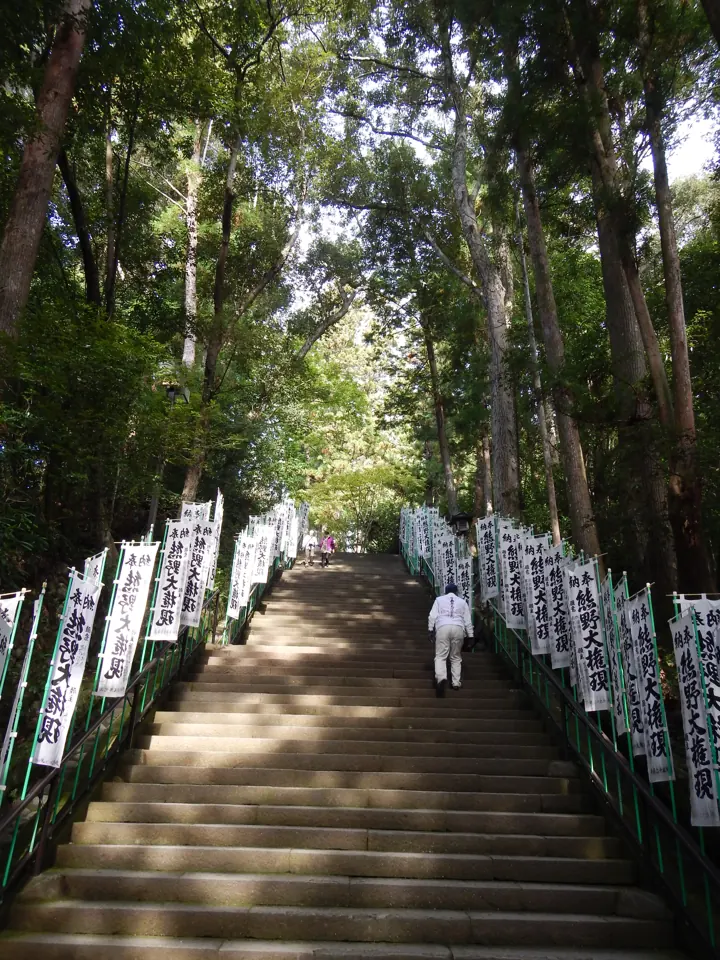
Vermilion halls in a mountain setting · Yatagarasu, the three-legged crow associated with guidance · The large camphor tree in the precinct
Estimated visit
45–75 min
Walking from Nachisan bus stop to the main shrine, worship and the return walk. Excludes the bus ride, Daimonzaka pilgrimage walk, formal prayers, paid facilities, Seigantoji and Nachi Falls.
Getting there
From JR Kii-Katsuura Station, take a Kumano Gobo Nankai bus to Nachisan, about 30 minutes according to the official guide, then walk uphill to the shrine. The usual approach has stone steps. The official FAQ describes a parking-and-lift route for wheelchair users at the main shrine; confirm arrangements before travel.